EV:
2D to 3D Sketch Exploration – Jazz’s Not Dead, Reactivating a Sketchbook – 2019
2D to 3D Sketch Exploration – Jazz’s Not Dead, Reactivating a Sketchbook – 2019
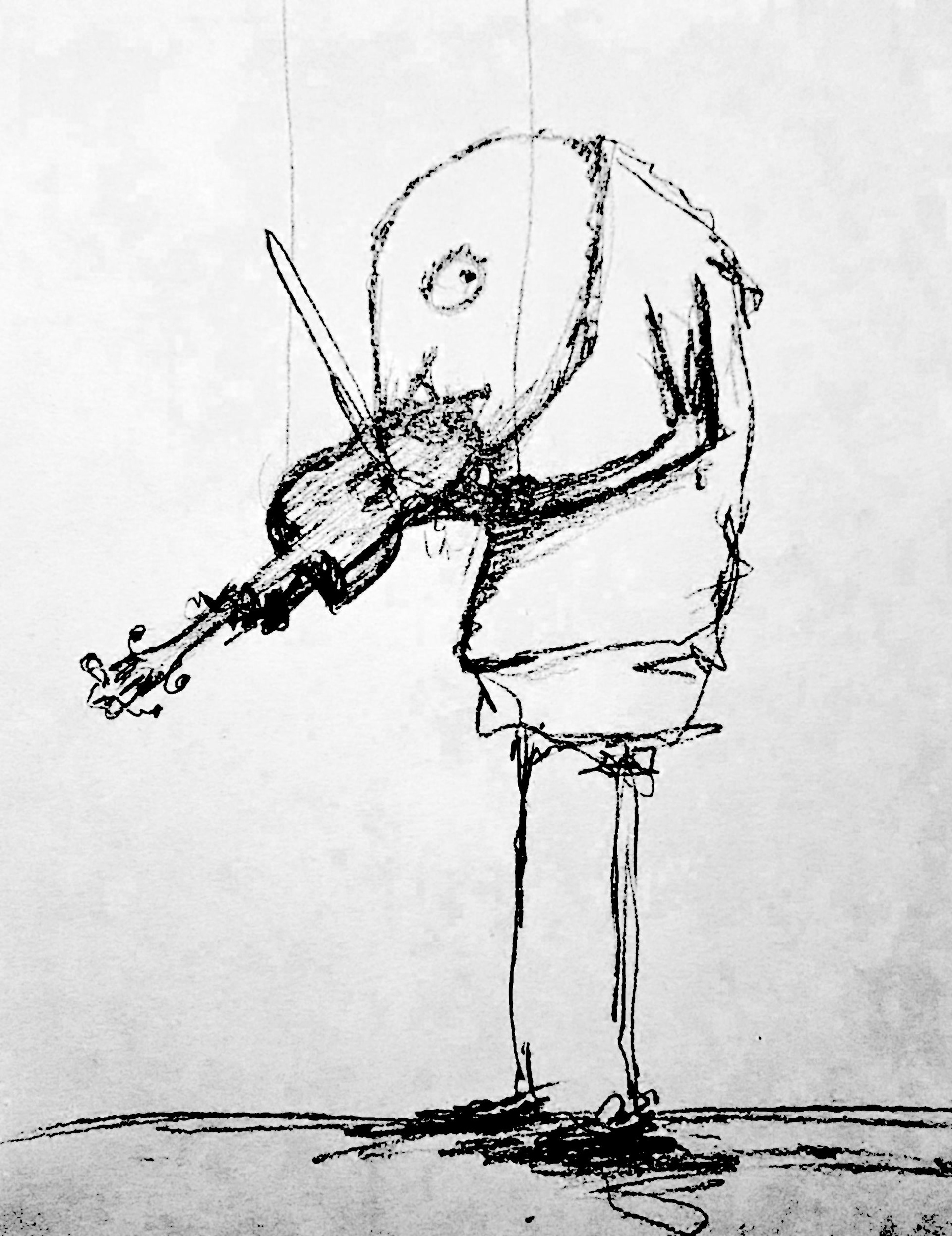
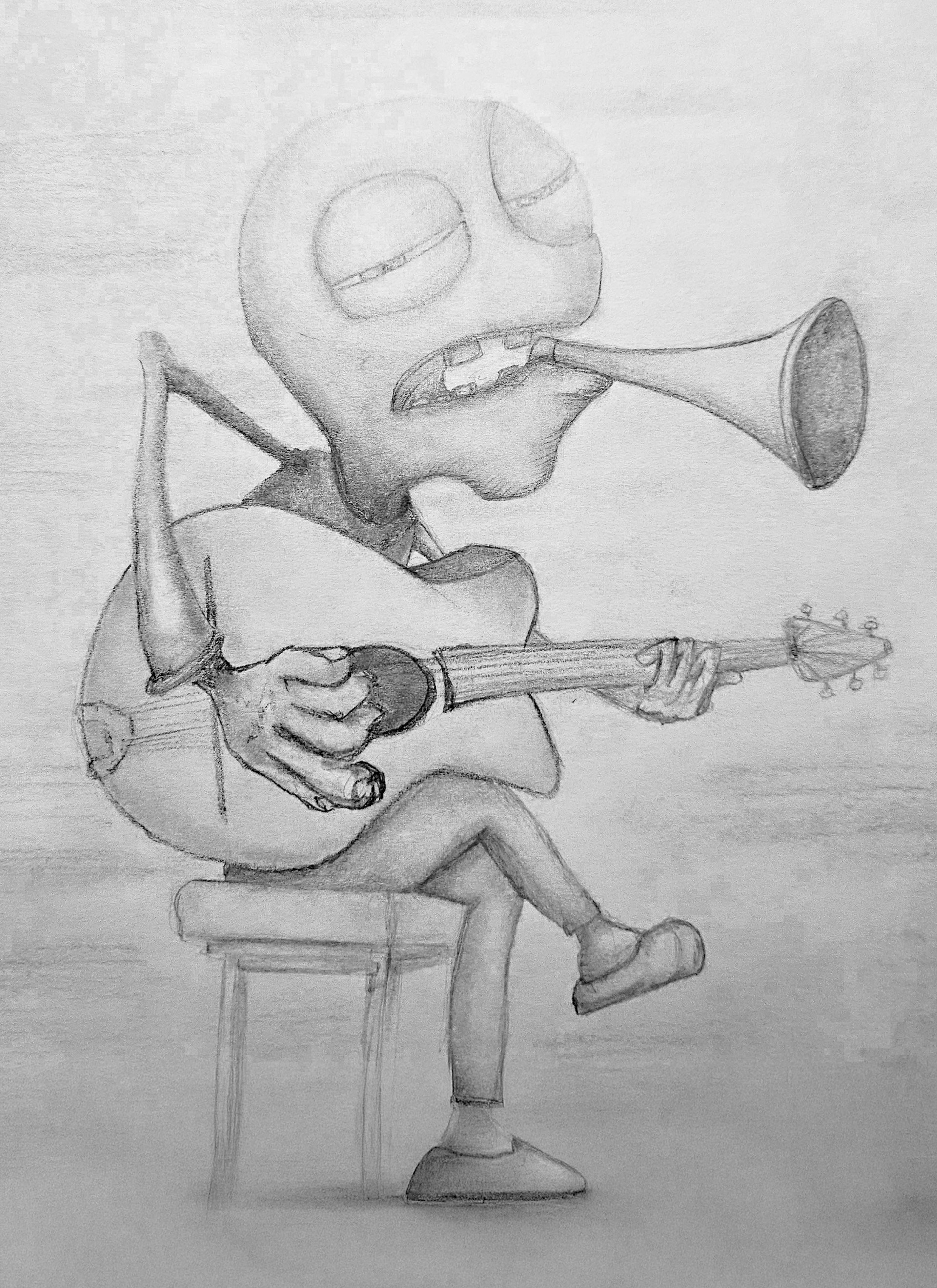
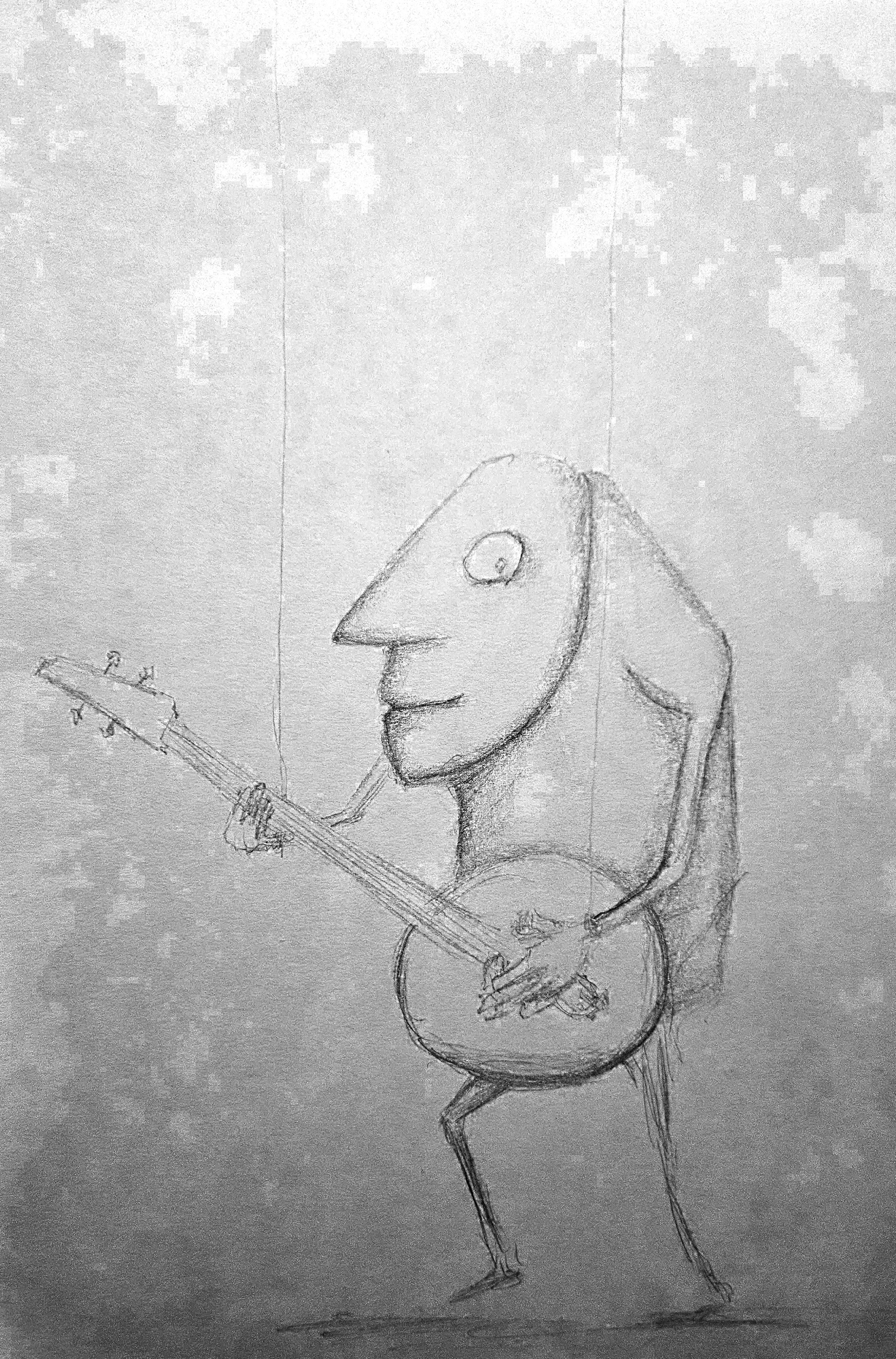
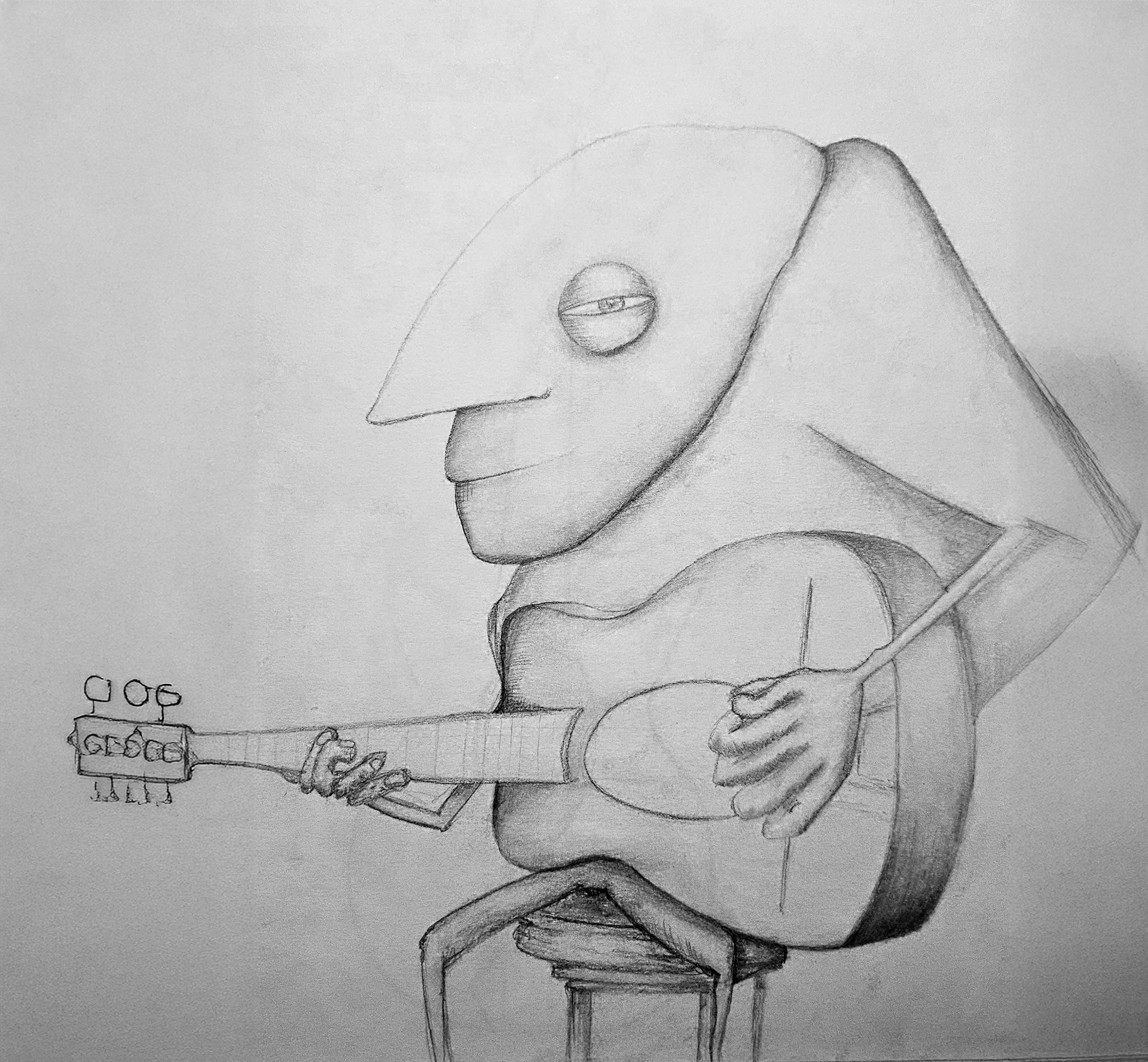
In 2019, while preparing a live painting performance for the Montreal International Jazz Festival, I filled a sketchbook with drawings. These quick pencil sketches served as a starting point to shape the visual world of the Jazz’s Not Dead project.
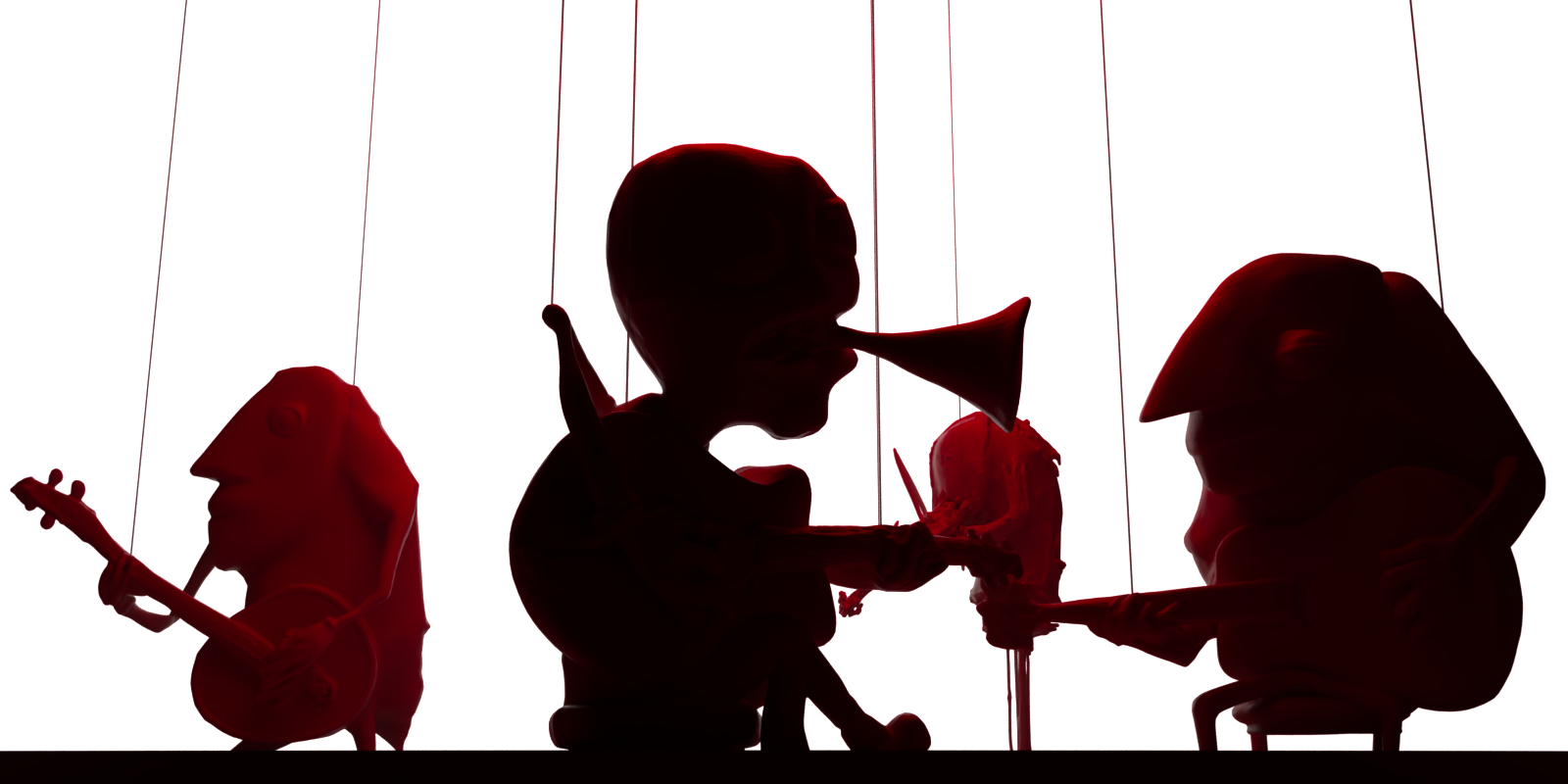
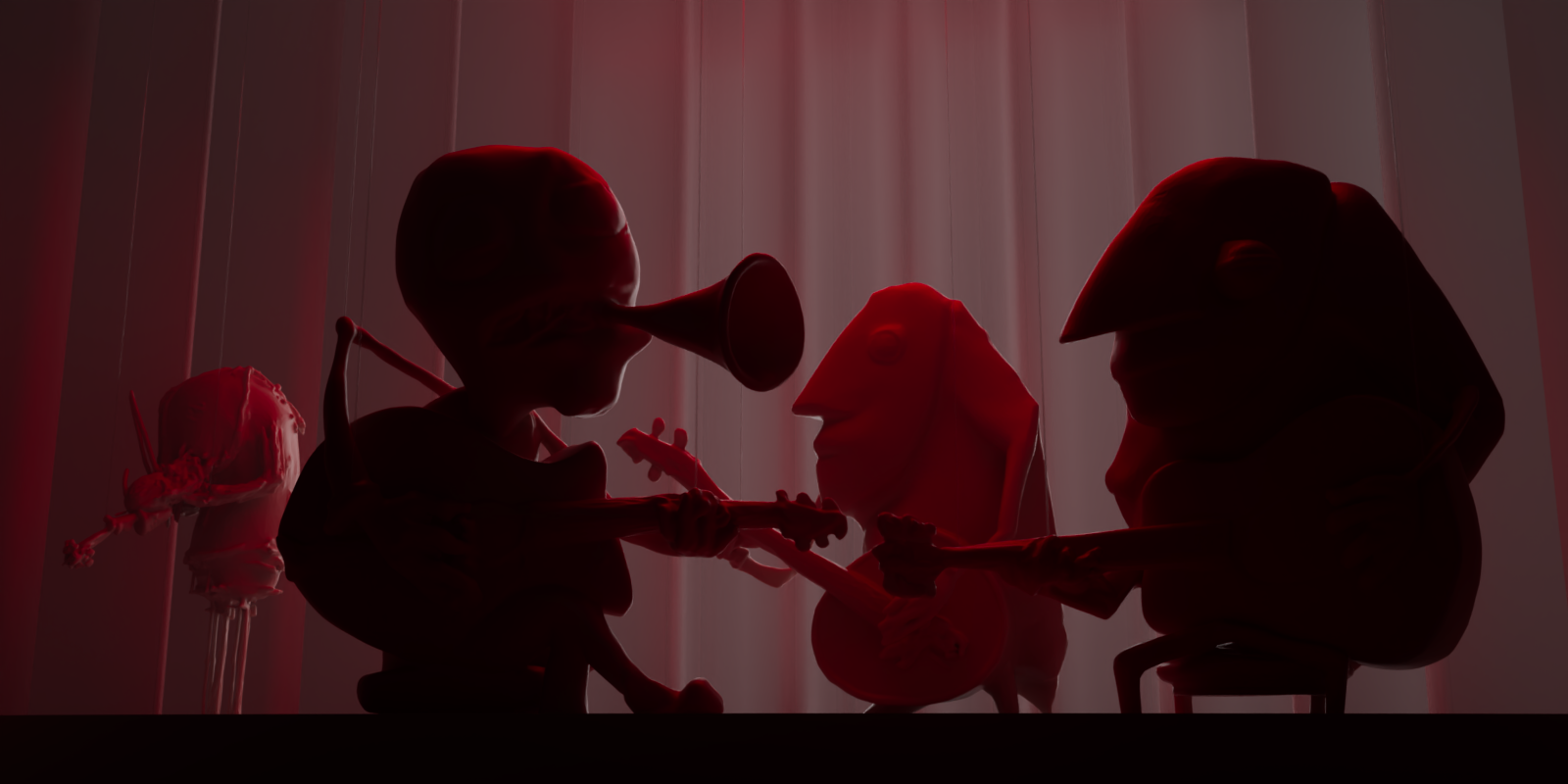
In 2025, I revisited this material through a technological exploration. Using a custom workflow in ComfyUI, I transformed some of these hand-drawn sketches into simulated volumes. Moving from 2D to 3D, the process generated volumetric perspectives from the original pencil lines. The approach was far from linear. By letting the tool extrapolate, interpret, and even distort the original strokes, I wanted to confront the gestural spontaneity of a fast sketch with the algorithmic reading of an artificial space.
The result lies somewhere between machine hallucination and ghostly sculpture. The jazzy figures from 2019 reappear in a new temporal layer, as if they had kept playing without me, in another dimension. This work is part of my ongoing research into artistic memory, automatic interpretation, and the reactivation of personal archives through contemporary tools.
VF:
Exploration esquisse 2D vers 3D – Jazz’s Not Dead, réactiver un carnet de croquis – 2019
Exploration esquisse 2D vers 3D – Jazz’s Not Dead, réactiver un carnet de croquis – 2019
En 2019, alors que je préparais une performance de peinture en direct pour le Festival International de Jazz de Montréal, j’ai rempli un carnet de croquis de dessins. Ces esquisses rapides au crayon ont servi de point de départ pour façonner l’univers visuel du projet Jazz’s Not Dead.
En 2025, j’ai revisité ce matériau à travers une exploration technologique. À l’aide d’un flux de travail personnalisé dans ComfyUI, j’ai transformé certaines de ces esquisses faites à la main en volumes simulés. En passant du 2D au 3D, le processus a généré des perspectives volumétriques à partir des lignes originales au crayon. L’approche était loin d’être linéaire. En laissant l’outil extrapoler, interpréter et même déformer les traits d’origine, je voulais confronter la spontanéité gestuelle d’un croquis rapide à la lecture algorithmique d’un espace artificiel.
Le résultat se situe quelque part entre l’hallucination machinique et la sculpture fantomatique. Les figures jazzées de 2019 réapparaissent dans une nouvelle couche temporelle, comme si elles avaient continué à jouer sans moi, dans une autre dimension. Cette œuvre s’inscrit dans une de mes recherches en cours sur la mémoire artistique, l’interprétation automatique et la réactivation d’archives personnelles à l’aide d’outils contemporains.
" The process then functions as a jazz method: an initial motif drawn from the sketchbook, followed by improvisational variations generated by the AI through repetition, deviation, and response. "
" Le processus lui-même s’apparente alors à une méthode jazz: un motif initial issu du sketchbook, suivi de variations improvisées par l’IA, faites de reprises, d’écarts et de réponses "
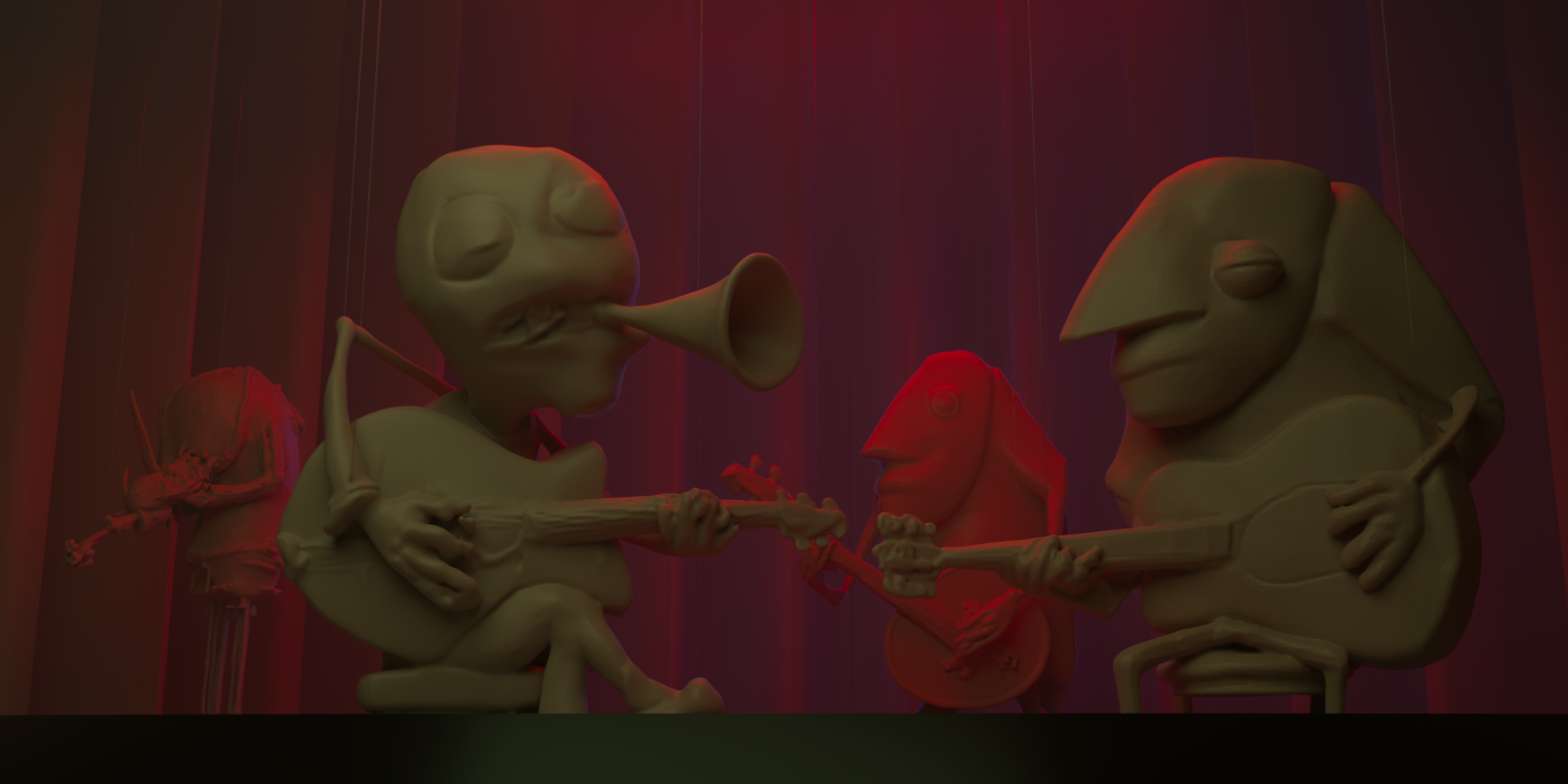
Hypothesis : In this exploration, I propose that the signature of the line can survive a change of medium. Even when translated into volume, the gesture remains legible, like a graphic identity that persists. I also hypothesize that by modulating the workflow’s degree of interpretation, I can steer a continuum from relatively faithful spatialization to a more hallucinatory drift, and that this continuum becomes a narrative tool.
The process then functions as a jazz method: an initial motif drawn from the sketchbook, followed by improvisational variations generated by the AI through repetition, deviation, and response.
Finally, the transformation stages a tension between the spontaneity of a fast sketch and the algorithmic reading of space, and it is precisely within this friction, between human intention and machine interpretation, that the work finds its substance.
Hypothèses : Dans cette exploration, j’avance l’idée que la signature du trait peut survivre au changement de médium. Même transposé en volume, le geste demeure lisible, comme une identité graphique qui persiste. J’émets aussi l’hypothèse qu’en modulant le degré d’interprétation du workflow, je peux piloter un continuum allant d’une spatialisation relativement fidèle à une dérive plus hallucinée, et que ce continuum devient un outil narratif.
Le processus lui-même s’apparente alors à une méthode jazz: un motif initial issu du sketchbook, suivi de variations improvisées par l’IA, faites de reprises, d’écarts et de réponses.
Enfin, cette transformation met en tension la spontanéité du dessin rapide et la lecture algorithmique de l’espace, et c’est précisément dans cette friction, entre intention humaine et interprétation machine, que l’œuvre trouve sa matière.